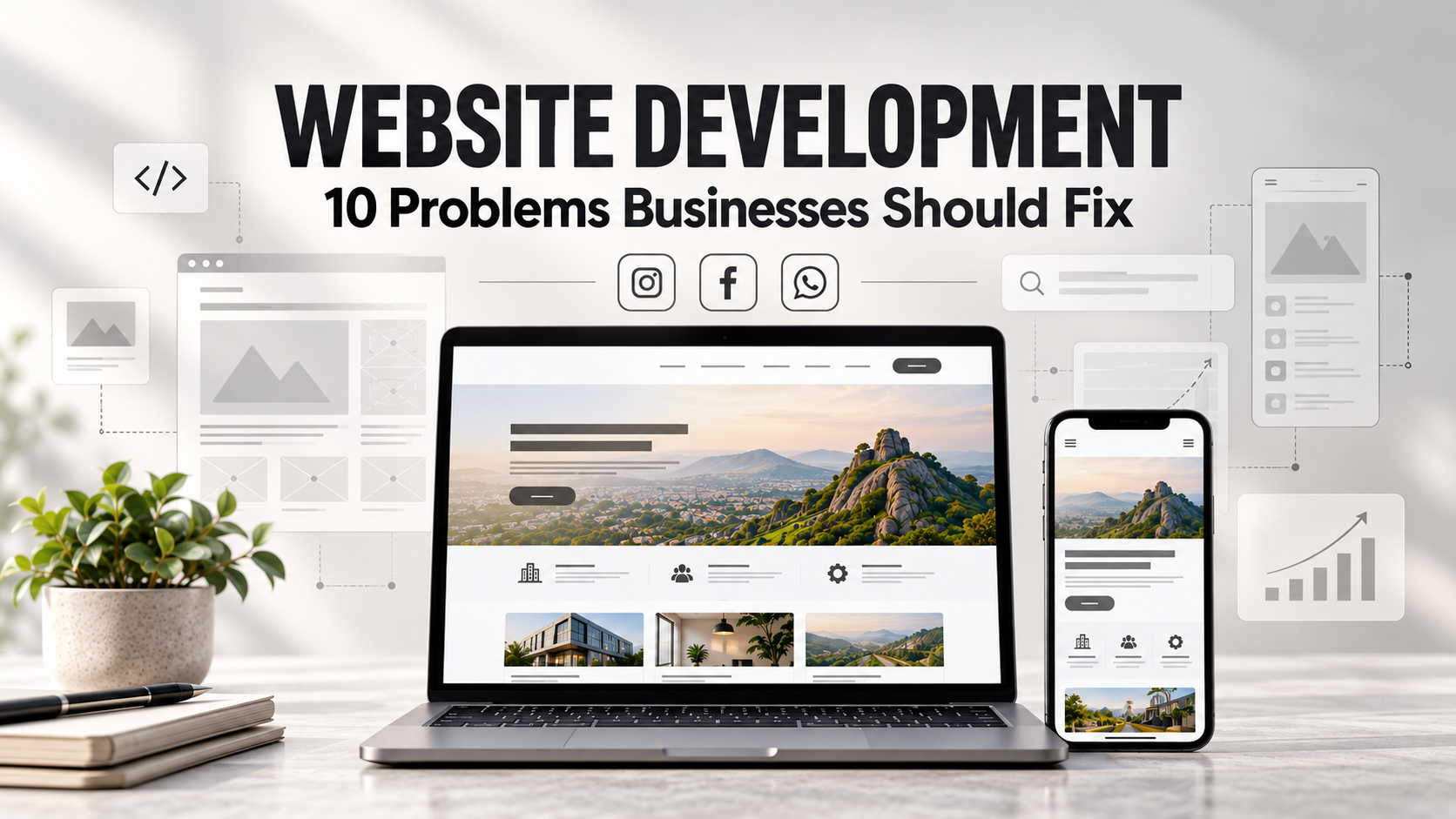
Looking for a Website Development Company in Ranchi, Jharkhand? 10 Website Problems Every Business Should Solve
A business can have a website, receive visitors and still get very few enquiries. Sometimes traffic is not the main issue. People arrive but cannot tell what the company offers, whether it serves their area or how to get in touch. They may leave before the business gets a chance to speak with them.
This happens to businesses in Ranchi and across Jharkhand, whether the website is new or has been online for years. The useful question is not simply, “Does our website look good?” It is, “Where might a potential customer get stuck?” The following ten problems offer a practical place to start.
Why Having a Website Is Not Enough for a Business
A website should help someone move from an initial question to a confident next step. That requires clear service information, easy navigation, credible business details and a contact process that works on a phone.
An attractive design can create a good first impression. It cannot make up for pages that load slowly, leave questions unanswered or hide the enquiry button. Search visibility matters too: customers need to find the right page before they can use it.
10 Website Problems Ranchi & Jharkhand Businesses Should Fix
1. Slow Website Loading
If a visitor waits too long for a page, they may return to search results before seeing your offer. Large images, unnecessary effects and poorly maintained plugins are common places to investigate.
Start with the pages people visit most. Compress images without making them blurry, remove features that add little value and ask your developer to check what is delaying the page. Test on a mobile connection as well as office Wi-Fi.
2. Poor Mobile Experience
A customer may discover your business through a phone search, an Instagram link or a WhatsApp recommendation. If text is tiny, menus are awkward or buttons are too close together, the page becomes difficult to use.
A mobile-friendly website needs readable text, simple navigation and forms that are easy to complete. Check that call and WhatsApp actions open correctly and that important information appears without excessive scrolling.
3. Visitors Cannot Understand the Business Quickly
The first screen should answer a few basic questions: What do you do? Who is it for? Which services matter most? Where do you operate? What can the visitor do next?
Replace broad claims with a specific headline and a short explanation. For example, a clinic should make its specialties and appointment route easier to find than a long statement about its vision.
4. Confusing Website Navigation
Visitors should not have to guess whether a service is under “Solutions”, “Expertise” or “What We Do”. Too many menu items and unclear page names slow them down.
Group related pages logically and use labels customers would recognise. Ask someone unfamiliar with your business to find a service, your location and a contact option. Where they hesitate, improve the menu or page links.
5. Weak Service Pages
A single page listing every service may tell customers too little to make a decision. Someone considering a particular service often wants to know what is included, who it suits and what happens next.
Give important services their own useful pages when there is enough distinct information to share. Write for the questions customers actually ask, rather than creating near-identical pages with only the location name changed.
6. Weak or Missing Calls to Action
A visitor can understand the offer and still leave if the next step is unclear. “Call”, “Send an Enquiry”, “Book a Consultation” or “Get a Quote” should appear where the decision naturally happens.
Choose actions that match the service. Place them near relevant information and use clear button text. There is no need to fill every section with a sales message.
7. Lack of Trust Signals
Before contacting a business, people often look for evidence that it is active and credible. An anonymous website with no real work, business information or clear contact details makes that harder.
Show genuine projects, useful case studies, accurate company information and authentic customer feedback where available. Include certifications only when they apply. Specific, verifiable details are more helpful than unsupported claims of being the best.
8. Website Is Not Search-Engine Friendly
If page titles, headings and service information are vague, search engines may struggle to understand which pages answer particular queries. Visitors can face the same confusion.
An SEO-friendly website has a logical page structure, useful content, descriptive titles, relevant internal links and pages that work well on mobile. These foundations support search visibility, though they cannot guarantee rankings.
9. Complicated Contact or Enquiry Process
A long form can discourage someone who only wants to ask about availability or pricing. Hidden phone details and broken WhatsApp links create the same problem.
Ask only for the information needed to begin a conversation. Make contact options easy to find, test them regularly and confirm that form submissions reach the right person.
10. Website Cannot Grow With the Business
A site built only for today may become difficult to update when you add services, locations, articles or campaign pages. That can make even small changes slow and expensive.
During business website development, discuss who will update the content and what may be needed later. Plan a structure that can accommodate new pages, analytics, lead features, integrations or online payments when the business needs them.
What Should a Professional Business Website Actually Do?
A useful website helps a visitor understand, trust, explore and take action. Clear services answer the first question. Easy navigation and relevant pages help them explore. Genuine business details build confidence. A simple contact route lets them act.
That sequence is a practical way to judge professional website development. Review your site on a phone and try completing a customer task yourself: finding a service, checking whether it fits and sending an enquiry. The points where you pause are worth fixing.
How to Choose a Website Development Company in Ranchi or Jharkhand
Before hiring, explain the problem you want the website to solve. Are visitors struggling to find information? Are enquiries difficult to track? Do you need room for new services? A developer should ask about your customers and goals before proposing pages and features.
Review genuine previous work, including how those websites behave on mobile. Ask how service pages and basic SEO will be planned. Clarify the scope, content responsibilities, delivery process, domain and hosting ownership, access after launch and support terms. Also ask how easily the site can expand.
When searching for a top website development company in Ranchi, Jharkhand, look beyond attractive portfolio images. The more useful test is whether the team can identify customer difficulties and explain how its proposed website addresses them.
One Pixel Production approaches website projects by understanding the business, its audience, services, customer journey and enquiry goals first. Mobile use, search requirements and future marketing needs then become part of the planning. Businesses comparing a website development company in Jharkhand can use the same questions to assess any proposal.
Planning a Better Website for Your Business?
You do not have to rebuild every page at once. Start by finding where visitors lose clarity or confidence, then prioritise the fixes that make it easier to understand your services and enquire. If you are evaluating a website development company in Ranchi, it also helps to understand how a website should be planned.